

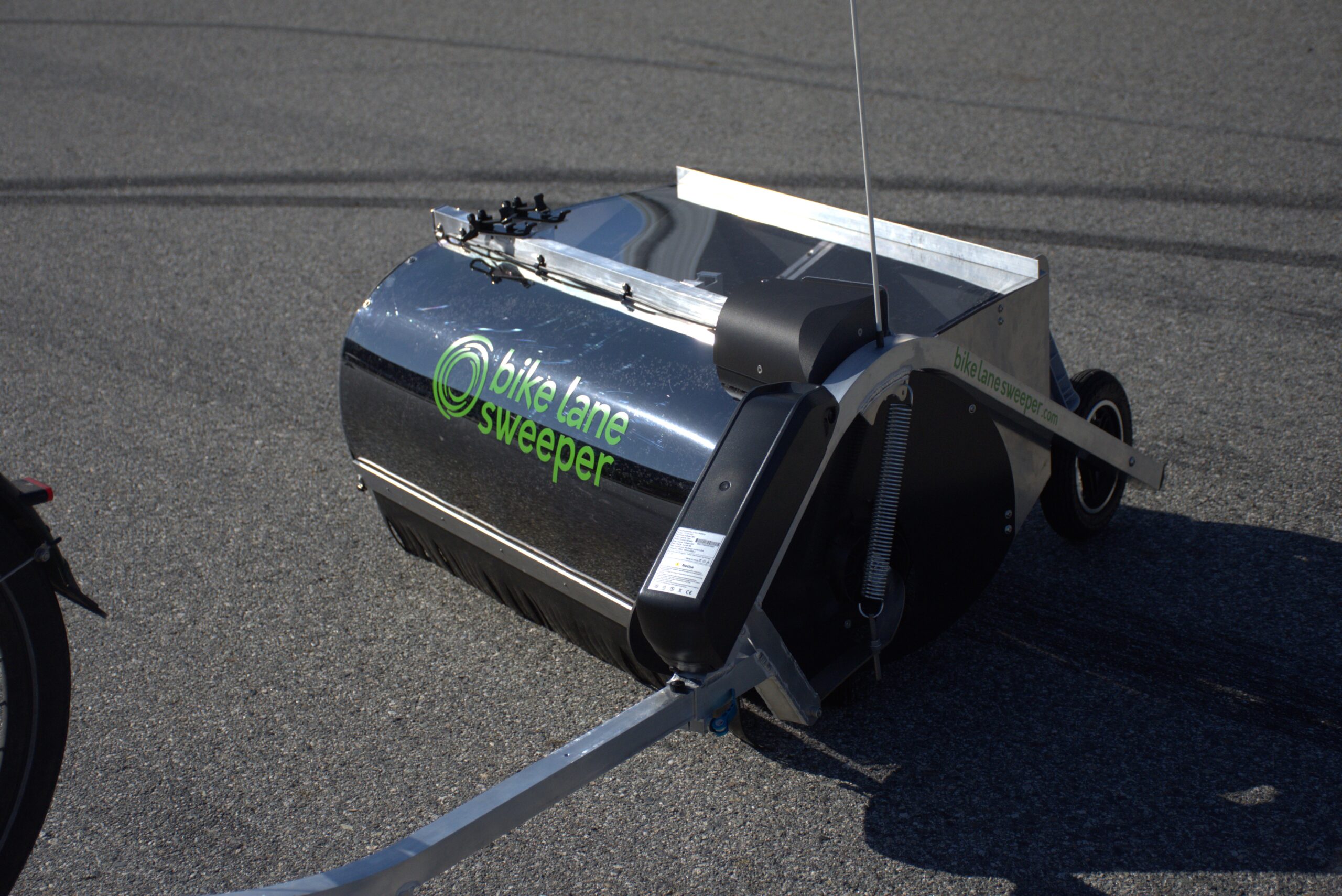
For most cyclists, the “invisible” enemy isn’t just a distracted driver—it’s the six-inch strip of glass, gravel, and metal shards that accumulates on the edge of every road. We’ve all been there: riding in a designated bike lane only to find it’s become a collection zone for everything the city’s car traffic has kicked to the curb. In many cities, these lanes go unswept for months because traditional street-sweeping trucks are too wide to fit between the bollards of protected lanes and too expensive for many municipal budgets to run daily.
Cedric Eveleigh, the mechanical engineer behind the groundbreaking Supre Drive mountain bike drivetrain, decided that if the cities wouldn’t clean the lanes, he would build something that could. Partnering with California inventor Pierre Lermant, Cedric has turned the Bike Lane Sweeper from a wooden prototype into a sophisticated, professional-grade piece of infrastructure equipment.
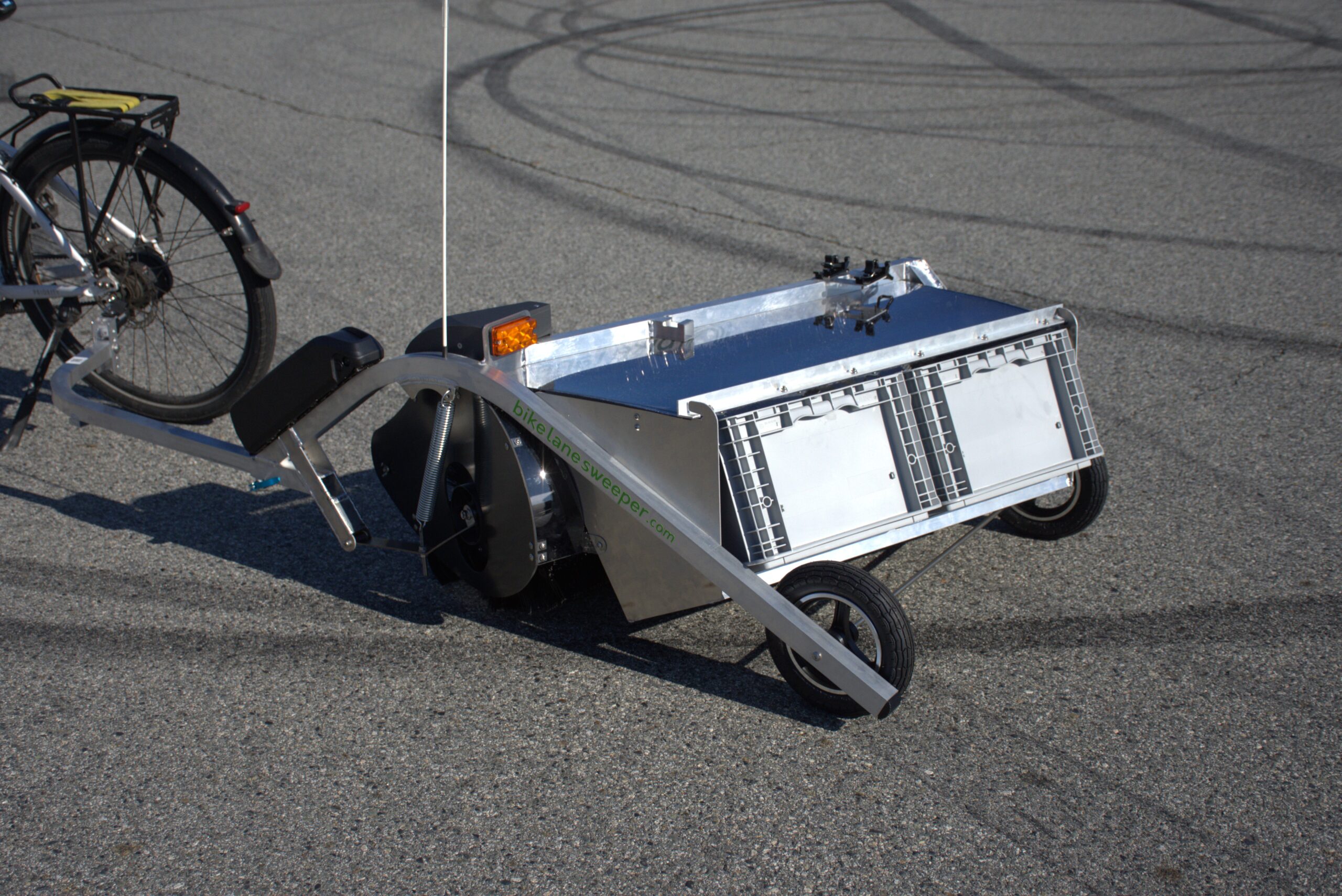
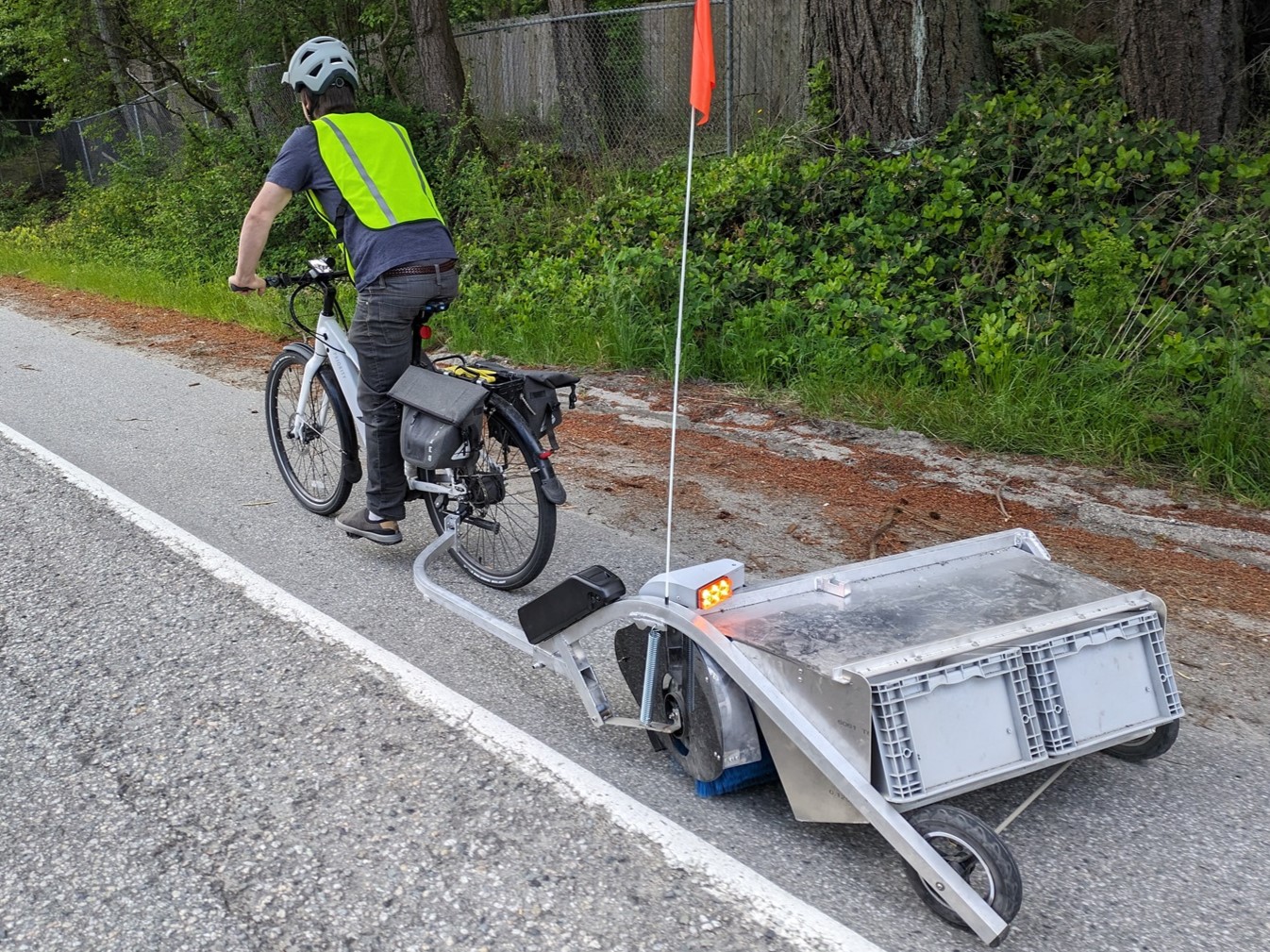
The machine itself is a masterclass in “right-sized” engineering. It is an all-electric trailer that hitches to the rear axle of any bicycle (though Cedric notes that e-bikes make the job a breeze on hills). Unlike passive brushes that just drag across the ground, this sweeper features an active, high-torque brush powered by an onboard battery. This allows the rider to cruise at a comfortable pace while the machine does the heavy lifting, flicking debris aside or collecting it into a hopper.
What makes Cedric’s approach unique is his “bike-first” mindset. The sweeper is only about one meter wide, meaning it can go exactly where the bikes go. He has integrated modern fabrication techniques like 3D printing for custom motor mounts and TIG-welded aluminum for a frame that is both lightweight and rugged enough to survive a collision with a curb or a log.
Perhaps the most brilliant feature is the hybrid functionality, which enables sweepers to be quickly switched between push-aside and pick-up sweeping . Push-aside sweeping is best suited for leaves or in more rural areas, while pick-up sweeping is ideal for urban environments with curbs and barriers. Additionally, GPS tracking detects when the brush is in use, with the data shown on a map of where sweeping has been completed.
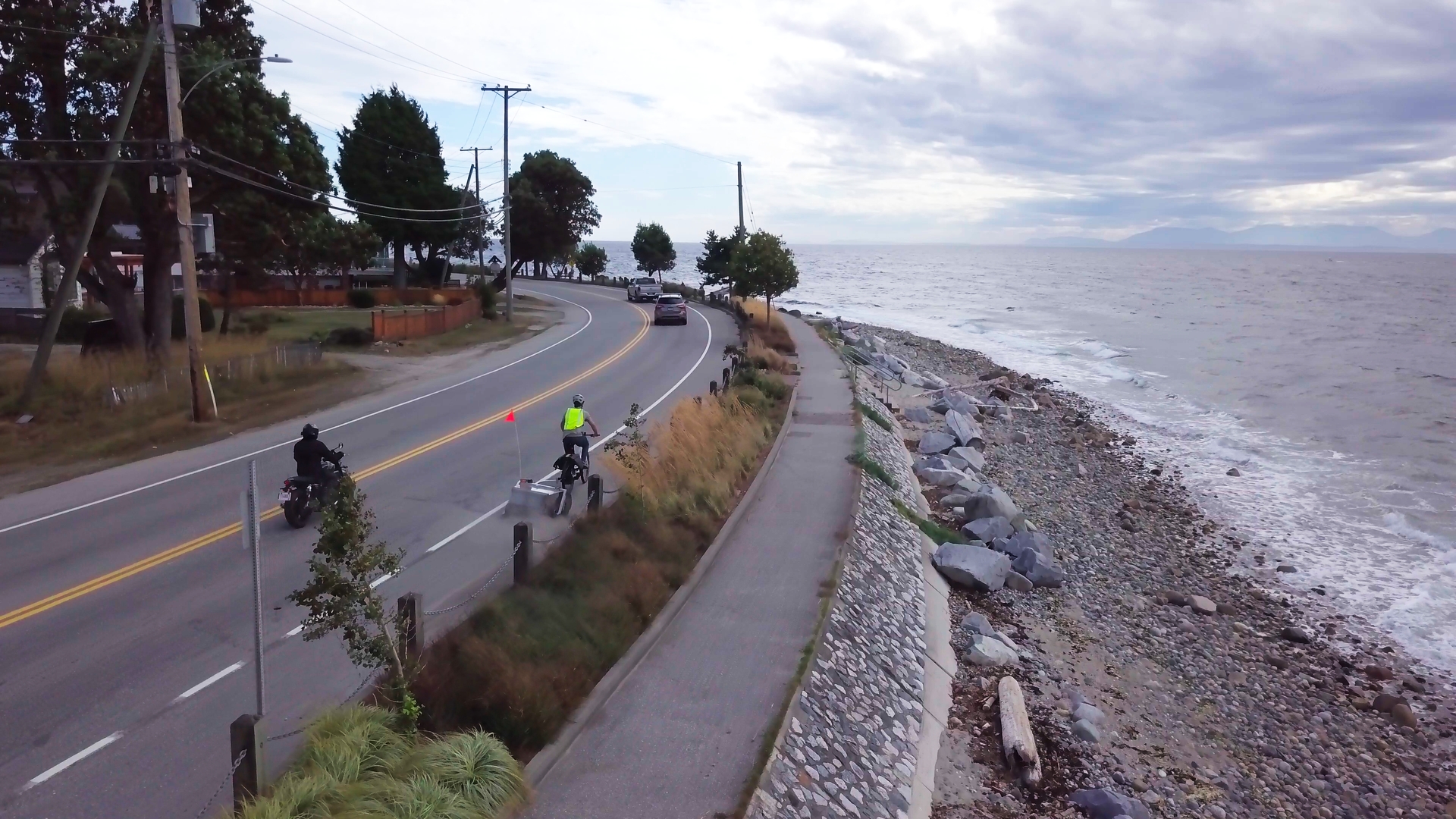
But this project is about more than just cool hardware; it’s about a shift in how we maintain our communities. By keeping the cost “orders of magnitude” lower than a $300,000 industrial truck, Cedric is democratizing road maintenance. His current pilot programs on the Sunshine Coast and in cities like Portland and Napa are showing that when you give people the right tools, they don’t have to wait for a 10-year municipal budget cycle to make their streets safer.
Cedric Eveleigh is proving that the bicycle isn’t just a tool for transportation—it’s a tool for transformation. Every time a Bike Lane Sweeper hits the pavement, it isn’t just removing glass; it’s removing a barrier that keeps people from choosing to ride. Through clever engineering and a deep commitment to the cycling community, the future of our streets is looking a whole lot cleaner.
We sat down with Cedric to get the dirt on the classic Who, What, Where, When, and Why on the Bike Lane Sweeper.
- “Who do you envision as the primary operators of these sweepers in the long run—is this a tool designed for city employees, or are you building this specifically to empower local bike advocacy volunteers to take maintenance into their own hands?”
Bike lanes are infrastructure and should be maintained with public funding, so the best outcome is to have municipal staff operating our bike lane sweepers. We sold some bike lane sweepers to municipalities, and this has been awesome, but most of our sales have been to cycling advocacy groups sweeping bike lanes on a volunteer basis. While not the ideal long term outcome, volunteer sweeping is a great way to demonstrate the need for more maintenance of cycling infrastructure, and it demonstrates the effectiveness of the low cost option that our sweepers offer.
- “What was the single most difficult piece of debris to account for during the design process? I’m curious if things like wet, decomposing leaves or heavy gravel required a specific ‘re-engineering’ of the brush torque or the suspension system.”
The sweepers are extremely effective with gravel, glass, nails, and scattered rocks. The most difficult debris is wet leaves. If enough leaves are allowed to accumulate, our sweepers can get overwhelmed and unable to power through them. We’re about to receive a new type of motor with a lot more torque and we’ll experiment with it to see how well it handles thick accumulations of wet leaves.
- “Where do you see the biggest potential for growth outside of North America? Are there specific types of city infrastructures (like the narrow paths of Europe or the high-density lanes in Asia) that influenced the compact 1-meter width of the machine?”
We think our sweepers could be used just about everywhere on Earth! We’ve started receiving inquiries from potential customers in Europe. We’re even considering partnering with a manufacturer over there (to reduce the cost of shipping the sweepers to European customers).
The 1-meter width is inspired by our practical experience in North America with prototype sweepers. It’s the sweet spot that is reasonably wide for avoiding repeat passes while also making it through all the narrow parts of our cycling infrastructure.
- “When will the design be finalized enough for large-scale production, and what is the ‘milestone’ you are looking for in your current pilot tests before you feel ready to ship these to every major city?”
The design is nicely refined at this point. Early on in this project, there were some big design changes, such as the “hybrid” sweeper functionality, which enables our sweepers to be quickly switched between pick-up and push-aside modes. Lately, our design changes have been smaller, more gradual refinements. We’re ready to ship to major cities today!
- “Why did you choose to tackle the problem of bike lane debris specifically? With your background in high-performance mountain bike components, what was the ‘lightbulb moment’ that made you realize that a tow-behind sweeper was the most important thing you could be building right now?”
My development of mountain bike technologies got me to move to the Sunshine Coast, and it’s the debris in the bike lanes (or road shoulders) on the Sunshine Coast that inspired the bike lane sweepers. When I first moved to the Sunshine Coast, I volunteered a few times with a local group called Transportation Choices that organized events where volunteers swept sections of road shoulders by hand with brooms. It was while sweeping debris with a broom that I got thinking about better ways to sweep bike lanes that aren’t big, three to five hundred thousand dollar sweeper trucks. This led to the idea of the bike lane sweeper, which is a highly effective solution that shows the power of bicycles.
Many thanks to Cedric and the team at Bike Lane Sweeper for sitting down with us and answering our questions. Take a look at the video below for more info and to see how the machine works!