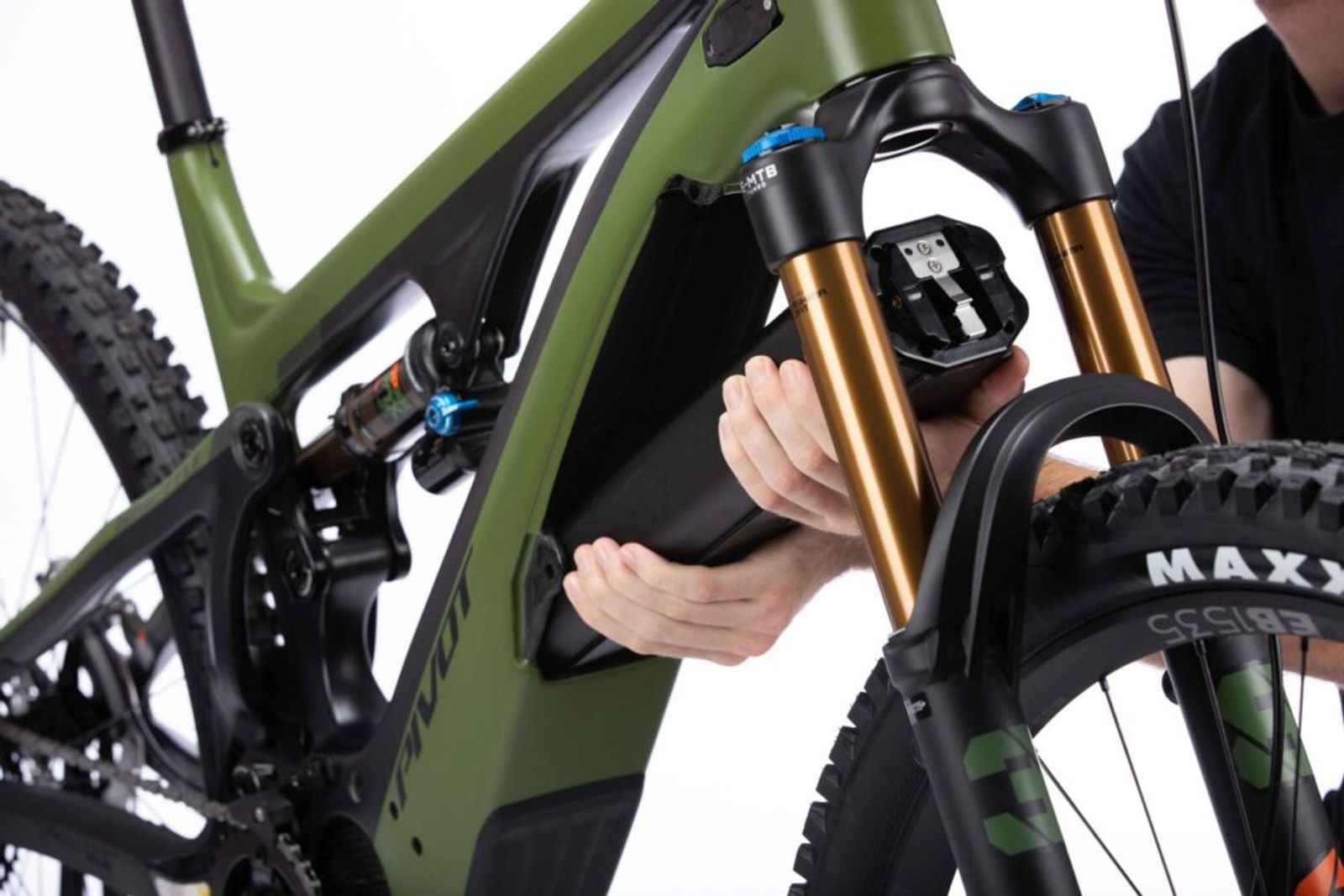
If your shop sells or services e-bikes, lithium-ion batteries come through your door every day, and not all of them are in good shape. Good e-bike battery safety comes down to five habits: check what comes in, limit the work you take on, store and charge with care, recycle old batteries and train staff for a failure.
Battery fires are rising. Toronto Fire Services counted 97 lithium-ion battery fires in the city by early September 2026, already more than in all of 2025 (CP24). Insurers have noticed. In August 2026, Insurance Business reported more lithium-ion battery claims and closer scrutiny of repair shops that service e-bikes and businesses that store spare batteries (Insurance Business).
Check Every E-Bike at Intake
Before a mechanic touches an e-bike, someone at the counter should check three things.
- The compliance label. Find the manufacturer's label on the frame or motor, and note the rated motor power and the maximum assisted speed. In BC and Ontario, an e-bike's motor can't be rated above 500 watts continuous, and its assistance has to stop at 32 km/h (BC rules, Ontario rules). A motor rated above that doesn't meet those rules, so don't treat the bike as a road-legal e-bike.
- Signs of modification. Ask whether the bike has an unlocked controller, an "off-road" or boost mode or aftermarket software that changes motor output.
- The battery itself. Look at it in good light before it comes into the workshop. Watch for cracks, dents, swelling and heavy corrosion, and check the connectors for scorch marks or melted plastic. Listen for hissing and smell for anything sweet or chemical. If something's off, don't take the battery in.
Rules differ by province, and they're changing. Ontario proposed new e-bike classes in April 2026 (ERO 026-0422), and they weren't in force as of October 2026. Check your province's current rules before you set your intake policy.
A written checklist makes intake the same every time, whoever's on the counter. Download our e-bike service intake checklist and adapt it for your shop.

Photo: Getty Images / Unsplash+
Decide What Your Shop Will and Won't Work On
Put your service scope in writing, so staff can say no without a debate at the counter. A common setup:
- Mechanical work (brakes, drivetrain, wheels and tires) on any e-bike that passes intake.
- Electrical work only for original-equipment diagnostics and the manufacturer's own software updates.
- No speed de-restriction, governor removal or battery modifications, for anyone.
- Aftermarket, home-built or modified battery packs stay with the customer. The bike can still come in for mechanical work.
For a flat tire or a gear adjustment, the simplest policy is to ask the customer to leave the battery at home. No battery in the shop means one less battery to worry about.
Store E-Bike Batteries Safely
When a customer's battery has to stay overnight, or you keep stock batteries on hand:
- Keep them in a fire-rated battery cabinet or a lithium-ion containment bag, away from anything that burns.
- Give them space. Batteries packed tightly together can pass heat from one to the next.
- Keep them cool and dry, out of direct sunlight.
- Store them partly charged, not full. The right level depends on the maker. Shimano, for example, recommends about 70% for long-term storage (Shimano). Follow each brand's own guidance.
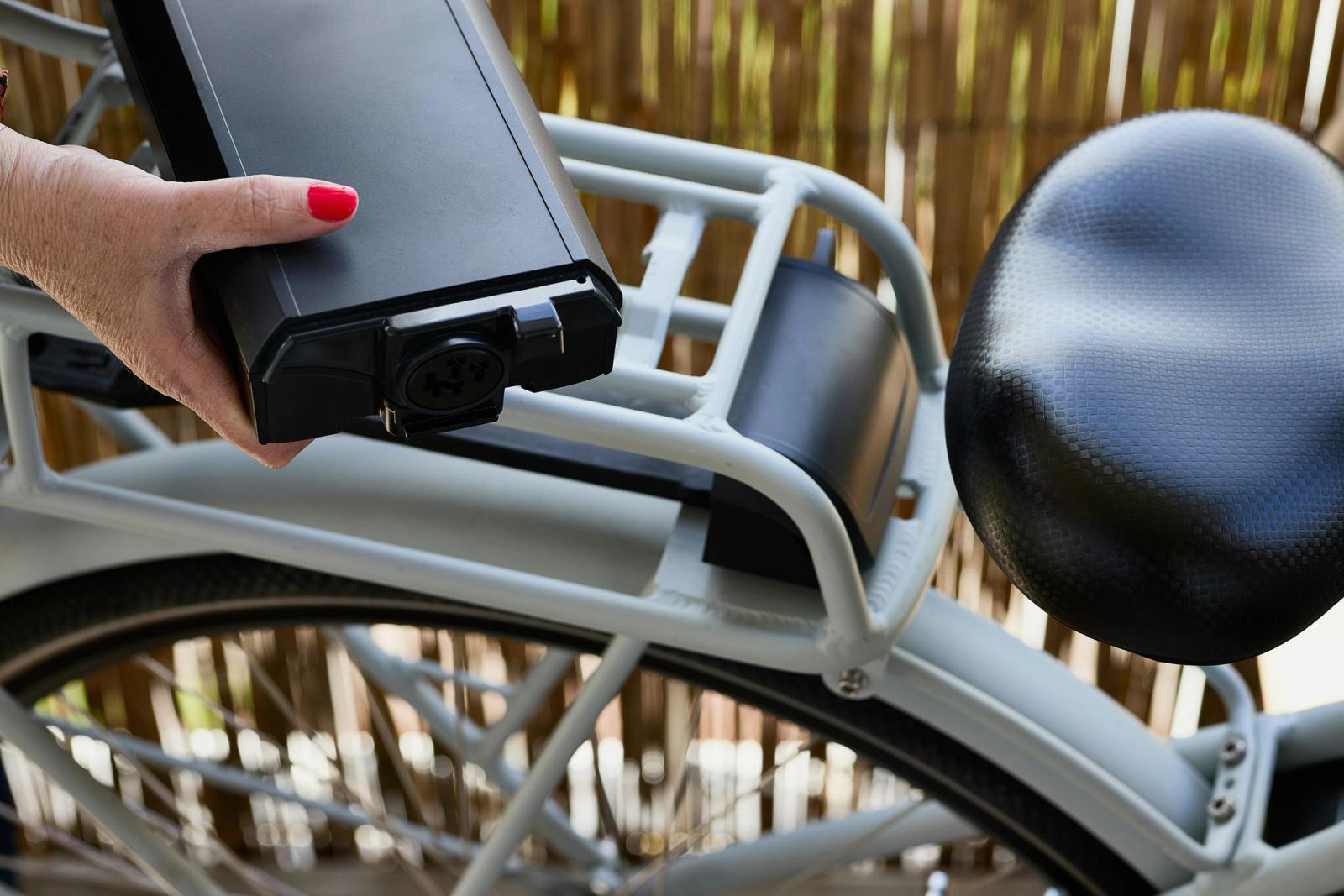
Photo: Olivie Strauss / Unsplash+
Set Charging Rules Everyone Follows
- Use only the manufacturer's charger for that battery.
- Charge during open hours, where staff can see it.
- Unplug batteries at closing. If one has to charge after hours, use a power bar with a timer so it stops well before morning. An end-of-day checklist helps.
- Never charge a battery that failed your intake check, or one that feels hot.
Bicycle Broker's bike shop program has two battery rules: e-bike batteries must be UL certified, and they're unplugged at night or charged on a timer power bar. We also recommend a burn bin (a fire-resistant container for a damaged battery), extra fire extinguishers for the shop and proper battery storage.
Your customers charge at home, so pass the habits on. Our e-bike battery guide for riders covers charging and storage at home.
Plan for a Battery Failure
A failing battery can go from warning sign to fire fast. Train staff to spot the signs: hissing or popping, heat, swelling, leaking, a change in colour or shape, smoke or an unusual smell.
- If a battery is smoking or on fire, get everyone out, close doors behind you if it's safe and call 911 from outside. Don't try to fight it.
- Tell the dispatcher a lithium-ion battery is involved.
- Why you don't fight it. Burning lithium-ion batteries can give off toxic gases, including hydrogen fluoride, and can reignite after the fire seems to be out (Emergency Response Guidebook, Guide 147).
- Walk every new hire through the plan on their first day, and run through it again before the spring rush.
Recycle Old and Damaged E-Bike Batteries
Used e-bike batteries don't belong in the garbage or the recycling bin. As of October 2026, Call2Recycle, Canada's national battery recycling program, collects e-bike batteries up to 5 kg at participating retailers that sell e-bikes (Call2Recycle FAQs). Shops that sell e-bikes can sign up as collection sites. The program supplies fire-retardant, UN-rated shipping boxes, and freight is covered (Call2Recycle collection partners). To point customers to a drop-off, use the Call2Recycle drop-off locator and filter for e-mobility batteries.
Damaged batteries need extra care. Don't put one in a regular collection box. Pack it in sand or another non-flammable material, and call Call2Recycle at 1-888-224-9764 for instructions (Call2Recycle FAQs).
In BC, whole e-bikes, battery included, are recycled through Call2Recycle's BC E-Transport program. What's collected differs by province, so check the locator for your area.
Tell Your Broker What E-Bike Work You Do
Insurers are looking harder at battery risk. Check that your policy reflects the e-bike work your shop does: sales, mechanical service, electrical diagnostics, rentals and battery storage. If your e-bike work has changed since your last renewal, tell your broker. Ask Tara to go through your setup with you.
Coverage is subject to policy terms, conditions and exclusions.
If you sell or service e-bikes, see how our bike shop insurance program works for shops like yours.